
When the FBI’s Behavioral Analysis Unit developed its criminal profiling methodology in the 1970s and 1980s, no one anticipated it would become one of the most powerful tools in modern cybersecurity. Yet that is precisely what has happened. Cyber behavioral profiling has carried the rigorous science of behavioral analysis from the most violent criminal cases in America into the world’s most complex cyber threat environments, and the results are reshaping how serious organizations approach adversary intelligence.
A Methodology Built on Decades of Operational Learning
The profiling methodology that Modus Cyberandi applies is not derived from academic theory alone. It was forged through more than two decades of active casework by Cameron Malin, who served as an FBI Special Agent and Behavioral Profiler for the duration of his federal career. During eleven years inside the FBI BAU, Cameron built the Cyber Behavioral Analysis Center from the ground up, creating the first systematic approach to behavioral assessment of cyber offenders.
That operational foundation distinguishes Modus Cyberandi from consulting firms that offer behavioral analysis services based on academic research or adjacent disciplines. The methodology here was developed in real investigations, refined through real prosecutions, and validated by real outcomes. That distinction matters enormously when the stakes of a cyberattack involve customer data, operational continuity, and organizational reputation.
The Science of Digital Weapons and Digital Crime Scenes
One of the most intellectually compelling aspects of cyber behavioral profiling is the concept of digital weapons and digital crime scenes. Just as a traditional behavioral profiler analyzes the physical crime scene left by an offender, a cyber behavioral profiler analyzes the digital artifacts left by an attacker.
The malware an attacker uses reveals information about their technical sophistication, their risk tolerance, and their operational priorities. The specific vulnerabilities they target reveal their knowledge base and their strategic objectives. The timing of their intrusion activity reveals their operational tempo and, often, their geographic location. The way they communicate during ransomware negotiations reveals their emotional state, their experience level, and their decision-making style. Every one of these data points contributes to a behavioral profile that grows richer and more predictive with each additional piece of evidence.
Modus Cyberandi’s Services: A Behavioral Intelligence Ecosystem
Rather than offering a single profiling service, Modus Cyberandi has built a comprehensive ecosystem of behavioral intelligence capabilities:
The vProfiler provides organizations with retained access to an experienced behavioral profiling expert on an as-needed basis. Behavioral Threat Intelligence amplifies conventional threat intelligence programs with human-factor analysis. The Ransomware Engagement, Analysis and Profiling service delivers behavioral intelligence for the uniquely high-stakes context of ransomware negotiations. Cyber Victimology Assessment helps organizations understand why they were or could be targeted. Digital Behavioral Criminalistics extracts human behavioral data from forensic artifacts. Cyber Influence and Information Operation Analysis decodes the psychological components of complex attack campaigns.
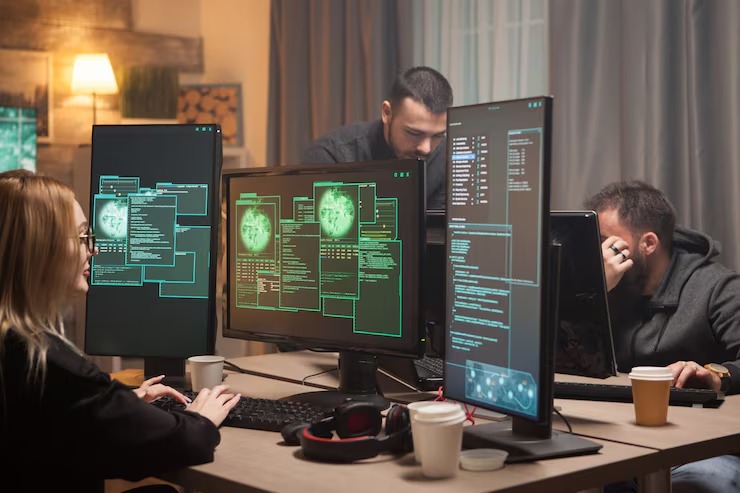
Each of these services reflects the same foundational insight: understanding the human being behind a cyberattack is the most powerful intelligence advantage available.
Cyber HUMINT Training complements this ecosystem by building in-house teams that can actively gather the human intelligence data these services analyze. An organization with both Modus Cyberandi’s profiling expertise and an internal team trained in Cyber HUMINT tradecraft has a genuinely comprehensive behavioral intelligence capability.
The Five-Eye Ransomware Consortium Connection
One aspect of Cameron Malin’s background that deserves particular attention is his leadership of the Five-Eye Behavioral Consortium to Combat Ransomware. This select international government partnership brought together behavioral analysis experts from the intelligence agencies of five allied nations to develop coordinated behavioral strategies for combating ransomware attacks. Leading that consortium required not just behavioral science expertise but the ability to integrate diverse national intelligence perspectives into coherent, actionable analytical frameworks.
That experience gives Modus Cyberandi a global intelligence perspective that is extraordinarily rare in the private sector. The behavioral patterns, organizational dynamics, and operational methodologies of ransomware groups that threaten organizations worldwide were studied, debated, and analyzed at the highest levels of international law enforcement through this consortium, and that institutional knowledge directly informs Modus Cyberandi’s current client work.
What Makes Behavioral Attribution Different
Traditional cyber attribution asks: who conducted this attack? Behavioral attribution asks a richer set of questions. Why did they target this organization? What motivated their tool and technique selection? What are their vulnerabilities in negotiation? What would cause them to escalate or de-escalate? What does their operational behavior reveal about their organizational structure and internal decision-making processes? These questions generate intelligence that changes strategic decisions, not just investigative ones.
Conclusion
Cyber behavioral profiling is not a new concept dressed in cybersecurity language. It is a rigorous, operationally validated discipline with roots in some of the most demanding investigative work ever conducted. Modus Cyberandi brings that discipline to organizations that need more than technical detection, organizations that want to genuinely understand, predict, and influence the adversaries targeting them. For those organizations, behavioral profiling is not an add-on. It is a core intelligence capability.